皆さん、英語の勉強は順調ですか?
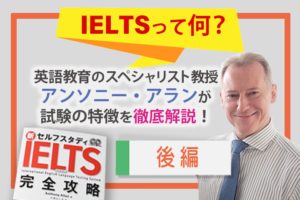
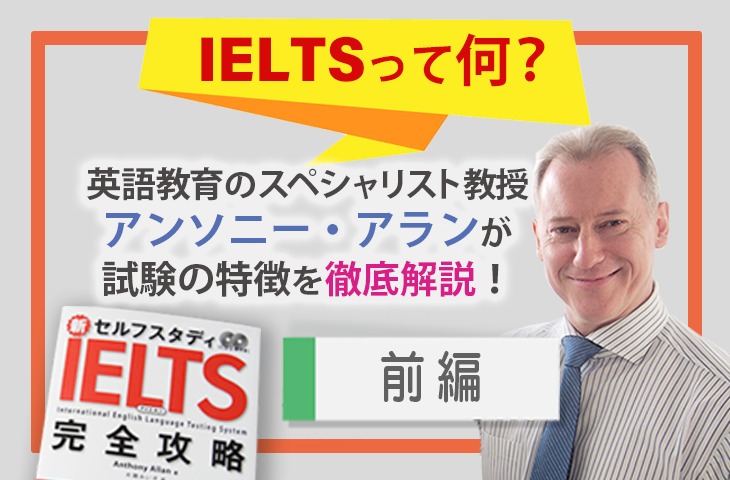
今回は、IELTSのエキスパートであるアンソニー・アラン先生に、IELTSとは何か、試験の注意点、勉強法についてのアドバイスをインタビューしてみました!
講師 アンソニー・アラン|Anthony Allan
イギリス生まれ、イギリスの大学で、英語教授法修士号(Master of Science in TESOL)取得。
英語教育に携わり20年以上、日本人の弱点を熟知したレッスンと独自のカリキュラムに定評あり。
英語教授のエキスパートとして著書も多数。
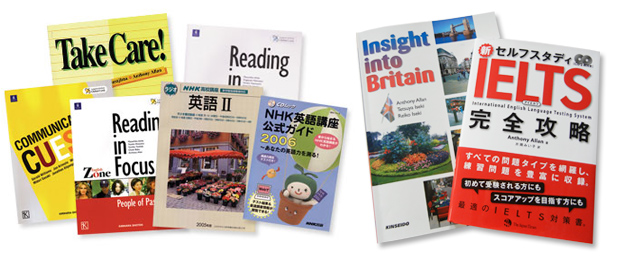
アンソニー講師の著書&編集参加書
- 新セルフスタディIELTS完全攻略本(Japan Times出版)
- 新セルフスタディIELTSライティング完全攻略本(Japan Times出版)
- 高等学校検定教科書「All Aboard! English Ⅰ&Ⅱ」(東京書籍出版)
- NHKテレビ/ラジオ高校講座「英語Ⅰ」&「英語Ⅱ」(NHK出版)
- NHK英語講座公式ガイド「英語力判定テストCD」(NHK出版)
- 理解トレーニング入門「Ear For English」(ピアソン・エデュケーション)
- 医療と看護の総合英語「Take Care」(大学英語教育協会出版)
- English Zoneで読む世界の動き「Reading in Focus」(桐原書店出版)
- コミュニケーションスキル「Communication Cues」(Longman桐原書店出版)
目次
コンピューター形式?それともペーパー形式?
As of mid-2026, IELTS is a computer-delivered test (IELTS on Computer). However, Speaking may be done in person with an examiner rather than via a web video system (Video Call Speaking, VCS). Also, students may request to do the writing module on paper (Writing on Paper) instead of on computer.
However, the Secure English Language Test (SELT) for UK Visas & Immigration (UKVI) purposes is only available as a computer-based test (so no Writing on Paper). One Skill Retake is available for Writing on Paper but must be taken in the same delivery mode as the original test. Therefore, if you chose Writing on Paper, your One Skill Retake must also be done with Writing on Paper
2026年半ばの時点で、IELTSはコンピューターで受験する形式(IELTS on Computer)が主流となっています。ただし、スピーキング・テストに関しては、ビデオ通話システム(Video Call Speaking: VCS)を介するのではなく、試験官と対面で行われる場合があります。また、受験者はライティング・モジュールをコンピューターではなく紙で受ける形式(Writing on Paper)を希望することも可能です。
しかしながら、英国ビザ・移民局(UKVI)への申請を目的とした「Secure English Language Test (SELT)」は、コンピューター形式でのみ提供されています(つまり、ライティングを紙で受験することはできません)。
「One Skill Retake(再受験制度)」は、ペーパー形式を選択した場合でも利用可能ですが、初回の試験と同じ実施形式で受験しなければならないというルールがあります。したがって、もしペーパー形式で受験することを選んだ場合、One Skill Retakeも同様にペーパー形式での受験となります。
TOEFL iBTしか受けたことない人が、IELTSを受けるための注意点を教えてください。
- IELTS Speaking
Whereas in the TOEFL iBT Speaking section you respond to questions on a screen and have no direct interaction with an examiner, in the IELTS you speak with an examiner either in person or via a video call (VCS) in real-time.The second task (short speech) in both tests is similar, but in the TOEFL you only hear the whole question and must answer immediately, but in IELTS you see the whole question and have 1 minute to write notes before you start speaking.
TOEFL iBTのスピーキング・セクションでは、画面上の問いに対して回答し、試験官との直接的なやり取りはありません。その一方で、IELTSでは対面、もしくはビデオ通話(VCS)を介して、リアルタイムで試験官と対話をします。
両テストの第2タスク(ショートスピーチ)は似ていますが、TOEFLでは問題の全文を聞き取り、その後すぐに回答し始めなければならないのに対し、IELTSでは問題の全文を(文字で)見ることができ、話し始める前にメモを取るための時間が1分間設けられています。
- IELTS Listening
Unlike the new TOEFL iBT in which all questions are multiple choice, in the IELTS you have to type words and/or numbers (or drag and drop). This means you have to catch specific words and numbers, and make sure you spell the words correctly.In the IELTS you can return and check/change answers, which you cannot do in the TOEFL.
すべての問題が多肢選択式(マークシート方式)である新しいTOEFL iBTとは異なり、IELTSでは単語や数字を入力(あるいはドラッグ・アンド・ドロップ)しなければなりません。これは、特定の単語や数字を聞き取り(あるいは読み取り)、かつそれらを正確に綴る必要があるということを意味しています。
また、IELTSでは前の問題に戻って回答を確認したり変更したりすることができますが、TOEFLではそれができません。
- IELTS Reading
The first task of the TOEFL is not actually a writing task, but a grammar and vocabulary knowledge task, as it requires you to complete partially written words in a paragraph. The IELTS has no such task.IELTS reading lasts 60 minutes and has 40 questions, compared with 30 minutes and 50 questions in the TOEFL. This means that on average you have 1.5 minutes to answer each IELTS question but only 36 seconds to answer each TOEFL question.
TOEFLの最初のタスクは、実のところライティングのタスクではなく、文法と語彙の知識を問うタスクです。というのも、パラグラフ内にある、綴りが不完全な単語を完成させることが求められるからです。IELTSには、そのようなタスクは存在しません。
IELTSのリーディングは60分間で40問であるのに対し、TOEFLは30分間で50問です。これは、平均すると、IELTSでは1問につき1.5分の回答時間がありますが、TOEFLではわずか36秒しか回答時間がないことを意味しています。
- IELTS Writing
In the TOEFL iBT, there are three tasks, while the IELTS has two. The first task of the TOEFL is not actually a writing task, but a grammar task, as it requires you to build a sentence by inserting given words in the correct order. The IELTS has no such task.The TOEFL’s third task is an integrated task, where candidates have to read a short text and student opinions, and then write a short answer that discusses aspects from the reading. In the IELTS, Task 1 involves describing a chart, graph or diagram, etc., and Task 2 involves writing a 4-5 paragraph essay. There are no such integrated tasks.
TOEFL iBTには3つのタスクがありますが、一方でIELTSには2つのタスクがあります。TOEFLの最初のタスクは、実のところライティングのタスクではなく、与えられた語句を正しい順序で挿入して文を組み立てることが求められるため、文法のタスクといえます。IELTSには、そのようなタスクは存在しません。
TOEFLの3番目のタスクは統合型(integrated)タスクであり、受験者は短いテキストと学生の意見を読み、その読解内容の諸側面について論じる短い解答を書かなければなりません。対してIELTSでは、タスク1は図表やグラフ、あるいはダイアグラムなどの説明を含み、タスク2は4〜5パラグラフ構成のエッセイ執筆を含みます。IELTSには、そうした統合型のタスクは含まれていません。
IELTSとTOEFLを並行して勉強することは可能でしょうか。
Yes, it is possible, but not advisable since they are different tests. I have never met a student who studied for both tests. However, students studying for the iBT sometimes stop and change to studying for the IELTS test. This is because the IELTS is often seen as easier than the iBT test. However, this doesn’t mean the IELTS is easy.However, the new version (January 2026) of the TOEFL iBT appears to be easier than the previous versions. Also, the task variety has greatly increased and some now resemble aspects of the TOEIC and IELTS tests. More variety may make the test more interesting, but it does seem to make the TOEFL iBT test trickier.
可能ではありますが、それぞれ異なる試験ですから、あまりお勧めはできません。私自身、これまでに両方の試験を並行して対策しているという学生には、一度も会ったことがありません。
ですが、TOEFL iBTの学習を中断し、IELTSの対策に切り替えるという方は時折いらっしゃいます。これは、IELTSの方がTOEFL iBTよりも易しいと見なされることが多いためです。もちろん、だからといってIELTSが「簡単」だという意味ではありません。 もっとも、2026年1月に導入されたTOEFL iBTの新形式は、以前のバージョンよりも解きやすくなっているようです。また、出題されるタスクのバリエーションが大幅に増え、中にはTOEICやIELTSの要素に似ているものも見受けられます。バリエーションが増えることで試験自体の興味深さは増すかもしれませんが、一方でTOEFL iBTをより「一筋縄ではいかない(トリッキーな)」ものにしているようにも見受けられます。
英検しか受けたことない人が、IELTSを受けるための注意点は何ですか。
They should be careful about knowing the differences regarding test structure and question types, and especially the target age of test-takers. IELTS can only be taken by people aged 16 or over, whereas Eiken is taken by younger students. This means the content of the IELTS is aimed at young adults and adults, so the content matter is more mature in nature. For example, in IELTS Task 2 writing you may be asked to write about employment/unemployment or raising children, which is difficult if you have never had these experiences.
試験の構成や出題形式の違い、そして特に「受験対象年齢」については、十分に注意して把握しておく必要があります。IELTSの受験は16歳以上に限定されていますが、それに対して英検はより低年齢の学生も受験します。 このことは、IELTSの内容が大学生や社会人を想定していることを意味しており、そのため扱われるトピックも、より成熟した社会的な性質を帯びています。例えば、IELTSライティングのタスク2では、雇用や失業、あるいは子育てといったテーマについて書くよう求められることがありますが、こうした経験が一度もない方にとっては、非常に難しく感じられることでしょう。
英検3級の人が、IELTS4.0を獲得するのは難しいですか。
Yes, because Eiken 3 = IELTS 3.0, so the gap to IELTS 4.0 is large. In addition, there are more questions for each section (Reading, Listening, Writing and Speaking) in the IELTS, and especially the Writing section of IELTS is much longer. But if students are very motivated and have enough time to study in order to get IELTS 4.0, it is possible.
はい、難しいです。英検3級はIELTS 3.0相当ですので、IELTS 4.0レベルとの差は大きいです。また、IELTSのほうが各パート(リーディング、リスニング、ライティング、スピーキング)の問題数が多く、特にライティングパートは長いです。モチベーションが高く、十分に学習時間を確保できるのであれば、IELTS 4.0獲得も可能です。
Speakingとは、どんなことを聞かれたり、話したりするのですか。
Test-takers are asked about topics that concern their daily lives, such as their neighbourhood, their family, their school, their workplace, their hobbies etc., and society in general. They are not asked about the details of difficult topics like physics or sensitive topics like religion or politics, for example. Basically, in Part 1 you are asked to talk about things that concern you, and in Part 3, things that concern society. In Part 2, you have to give a short 1-2 minute speech about an easy topic that concerns yourself, for example, your favourite shop, a gift you gave someone, a person you admire, etc.
受験者の皆様は、近隣地域やご家族、学校、職場、趣味といった日常生活に身近な話題、そして社会全般に関する事柄について質問されます。例えば、物理学のような難解なトピックの詳細や、宗教や政治といったデリケートな話題について問われることはありません。
基本的には、パート1ではご自身に関すること、パート3では社会全体に関わる事柄についてお話しいただくことになります。そしてパート2では、お気に入りのお店や、誰かに贈ったプレゼント、あるいは尊敬する人物といった、ご自身にまつわる親しみやすいトピックについて、1〜2分間の短いスピーチを行っていただきます。
IELTSを本気で伸ばしたいなら・・・
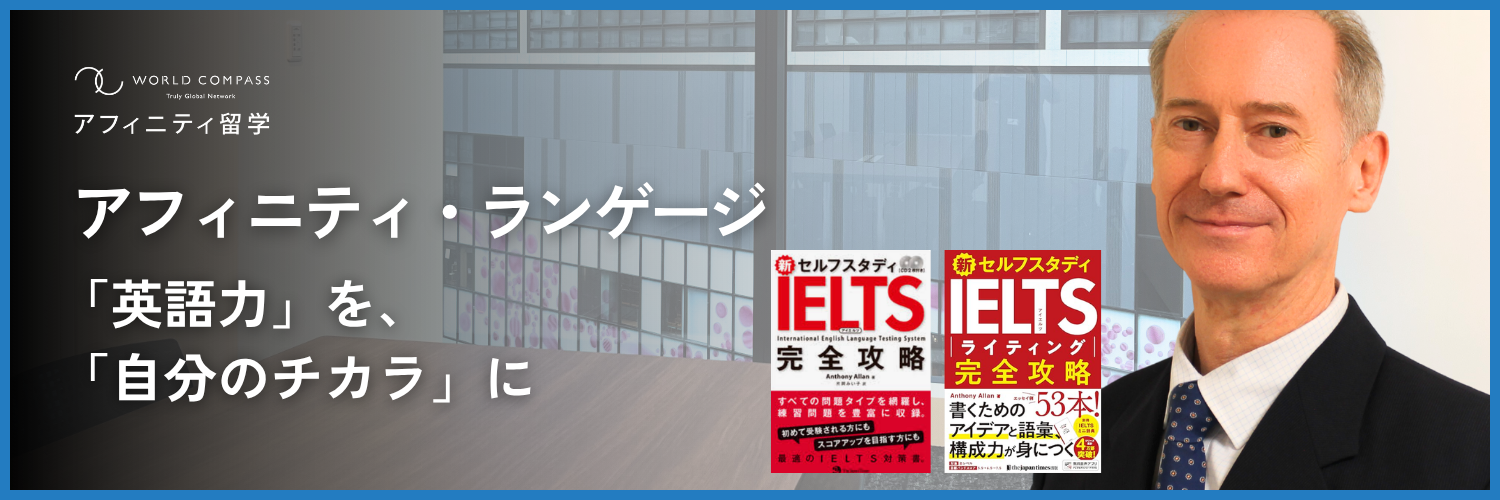
「新セルフスタディIELTS完全攻略本」の著者であるアンソニー先生のマンツーマンレッスンを受けられるのは、アフィニティ・ランゲージだけ!
無料体験レッスン(30分)もお試し頂けます。
「先生が解説するIELTS情報をもっと知りたい!」という方は、ぜひ以下のブログもご覧になってください。(後編では、海外留学に必要なIELTSのスコアや勉強量、Writingなどについてインタビューをご覧いただけます。)